


Our Socials
LinkedinJuly 28, 2026
Of the 150 finance leaders in Collectia CFO Outlook 2026, 94% have AI in operational use and half have it embedded in core processes. Nobody is standing still.


Adoption is nearly complete. Of the 150 finance leaders in Collectia CFO Outlook 2026, 94% have AI in operational use and half have it embedded in core processes. Nobody is standing still.
Yet 61% cannot clearly show what it gave back.
If the technology is running everywhere, why is the value so hard to find?
A pilot is designed to be safe. One task, walled off, measured on its own. That is sensible, and it is also why the return stays invisible. A model scoring credit in a corner does not change your cash position. An automation handling one step of ten does not show up in the numbers.
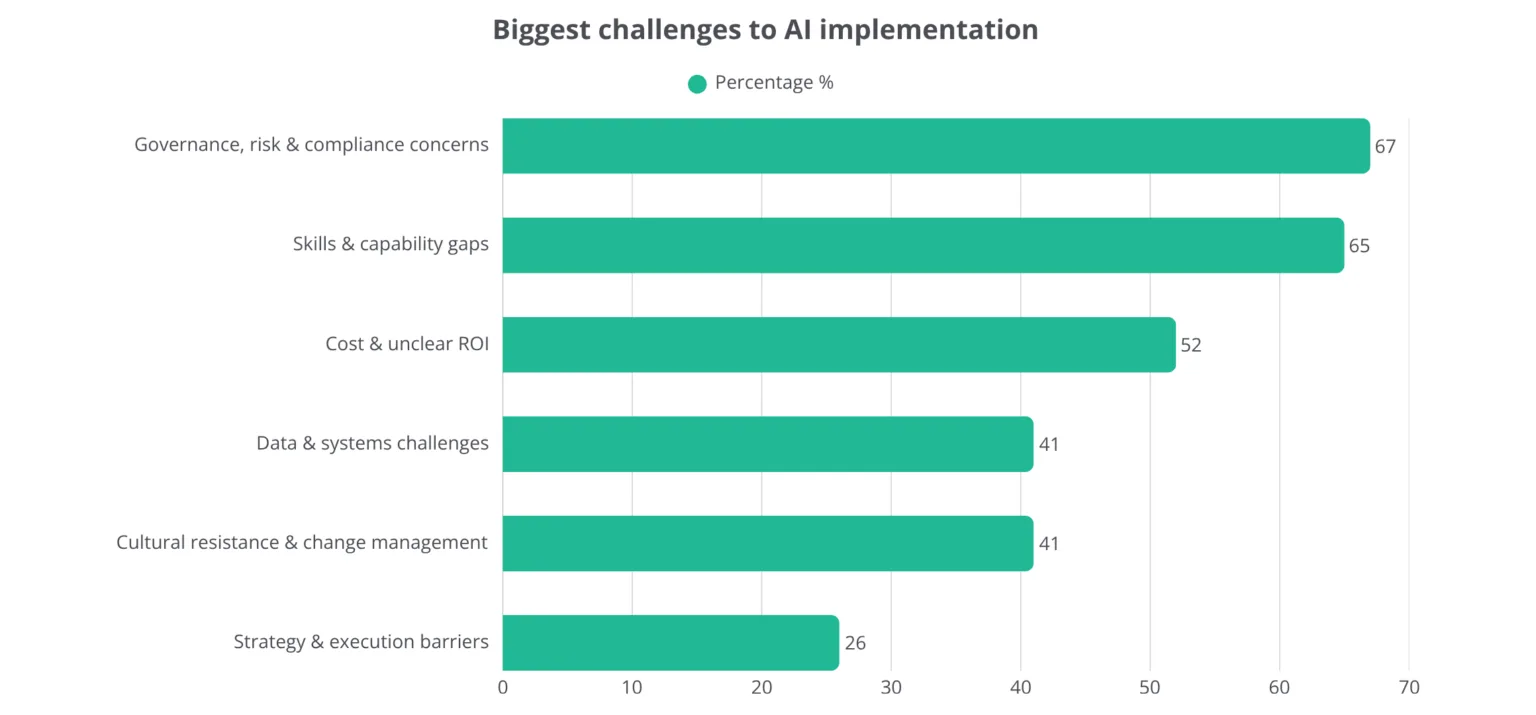
The obstacles are organisational, not technical. When we asked what holds AI back, the answers were not about the models. They were about cost, proof, and how the work is organised around the technology.
The debate about AI in finance usually asks whether companies are adopting fast enough. If 94% already have it running, that question has been answered. The more useful question is where the AI sits, because that is what determines whether it shows up in the numbers.
61% say cost and unclear ROI is their biggest barrier. Skills gaps follow at 56%, governance at 50%.
An AI that touches one isolated step cannot move a number the CFO recognises. One that runs across the whole process can.
The value of AI in credit management does not come from any single clever model. It comes from AI running across the whole flow, where each step feeds the next.
A better credit decision at the start means fewer overdue accounts at the end. An account flagged early means one less write-off. Collections prioritised by likelihood to pay means the same team recovers more. For companies operating across several markets the compounding matters more, because the alternative is a separate pilot in every country.
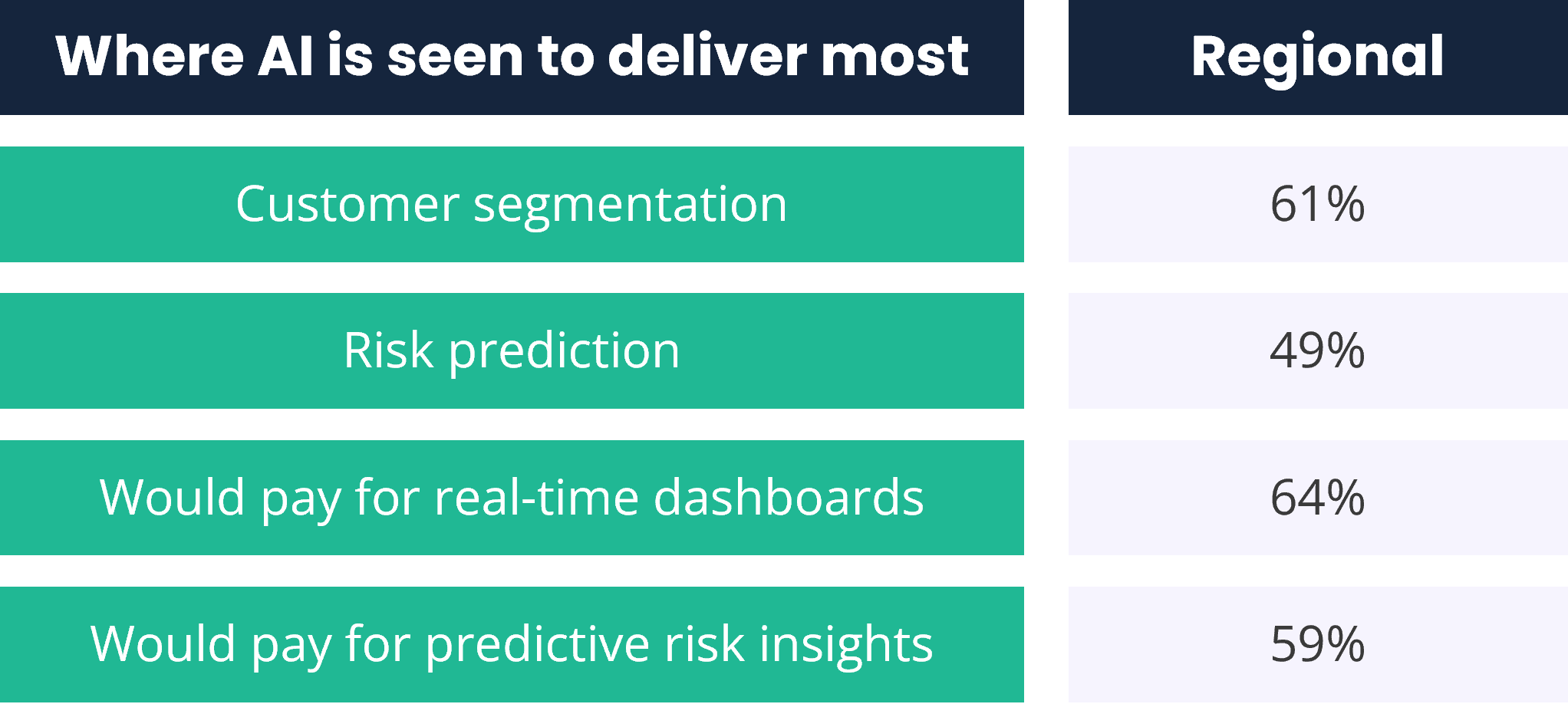
Where AI is seen to deliver most
We sometimes rely on AI for credit scoring, but there is a worry about information drift.
— Survey respondent, Collectia CFO Outlook 2026
This is where the whole credit lifecycle matters. The return on AI is not a property of the model. It is a property of where the model runs. A clever tool in an isolated corner stays a cost line; the same tool inside a connected process becomes a number you can point to.
Collectia works across that whole lifecycle, from credit information and invoicing through to collections and legal recovery, so the AI is not a proof of concept bolted to the side. It sits where each decision feeds the next, which is what turns an AI programme into a return you can actually see.
Stop asking whether you have enough AI, and start asking where it sits. Take one model you already run and trace whether its output changes a number anyone outside the team would recognise. If it does not, the problem is not the model. It is that it is working alone.
